


HANOI, VIETNAM – Vietnam has cemented its position as the fastest-growing economy in Southeast Asia, posting a remarkable 8.2% growth in the third quarter of 2025. This stellar performance has prompted global financial giant HSBC to revise its growth projections upwards, now forecasting 7.9% for 2025 and a robust 6.7% for 2026.
Economic Engine Roars to Life: Vietnam’s Q3 Growth Exceeds Expectations

A recent report titled “Vietnam at a Glance – Unstoppable Strides” released by HSBC’s Global Investment Research unit paints an optimistic picture of Vietnam’s economic trajectory. While other ASEAN nations maintained strong growth momentum in the third quarter, Vietnam’s 8.2% expansion stood out as being in a league of its own. This figure significantly surpassed market expectations of 7.2% year-on-year, reaffirming Vietnam’s status as the region’s economic powerhouse.
The most striking aspect of this growth, according to HSBC experts, is the resilience demonstrated by export-oriented sectors like manufacturing and trade. Despite a volatile global trade environment, Vietnam’s industrial production surged by an impressive 10% compared to the same period last year. Trade itself experienced a significant boom, with both exports and imports registering nearly 20% year-on-year growth.
Further bolstering this positive trend, Vietnam’s trade surplus more than doubled in the third quarter, reaching $3 billion compared to the first half of 2025. This indicates a healthy diversification of trade relationships, with Vietnam expanding its surplus with partners beyond the United States, which remains the largest destination for Vietnamese exports, accounting for one-third of the total market share.
Electronics Lead the Charge, AI Fuels Demand
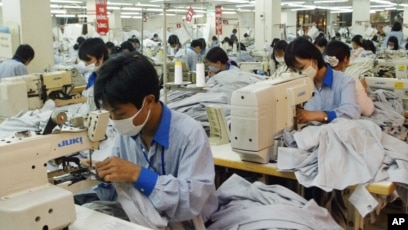
The electronics sector has emerged as a primary driver of this trade surge. Continued export growth to the U.S. market highlights a broader trend observed across Asia: technology-centric economies are capitalizing on the escalating demand for Artificial Intelligence (AI) applications, providing a strong foundation for trade.
Beyond trade, the services sector continues to exhibit strong growth, according to the HSBC report. Retail sales, a key indicator of final consumer spending, have shown significant improvement. In the third quarter, retail sales grew by 12% year-on-year, narrowing the gap with pre-pandemic trends to just 3% compared to the 10% observed at the beginning of 2025.
Sectors linked to tourism, including transportation and accommodation, are also experiencing an unprecedented boom. Vietnam has become a favored destination for Chinese tourists and is leading the ASEAN region in tourism recovery.
Having welcomed 15 million tourists by the third quarter, Vietnam is witnessing a visitor return rate equivalent to 120% of 2019 levels. While Vietnam’s economy is not as heavily reliant on tourism as some other nations like Thailand, its increasing competitiveness in the tourism sector offers a valuable buffer against potential challenges in the goods trade.
Trade Tensions as a Catalyst for Growth

Beyond the supply side of the economy, demand factors are playing an equally crucial role. In the third quarter, real consumption grew by over 8% year-on-year, while real investment saw an increase of nearly 10% compared to the same period. A key priority has been the acceleration of progress on major infrastructure projects. This focus presents an opportunity for further growth, especially considering that by the third quarter, public investment disbursement had only reached 50% of the year’s initial plan.
Alongside public investment, Foreign Direct Investment (FDI) continues to be a significant engine for Vietnam’s growth. While total FDI in the third quarter increased by 15% year-on-year, newly registered FDI saw a slight decrease of 9% compared to the same period. Notably, the composition of Vietnam’s FDI portfolio has shifted this year.
In 2024, Singapore, South Korea, and mainland China were the top three largest investors. However, currently, Singapore and mainland China each account for approximately one-quarter of new FDI, while South Korea’s market share has declined, being replaced by the United States. This indicates that despite trade fluctuations, two of the world’s largest economies continue to invest in Vietnam.
Following recent trade negotiations, emerging markets across ASEAN are now on a more level playing field, facing import tariffs of “19-20%.” Countries poised to benefit from ongoing trade tensions are expected to continue doing so, with Malaysia and Vietnam being prime examples.
Inflation Under Control, Credit Growth Accelerates
Despite the high growth figures, HSBC assesses that Vietnam’s inflation remains largely under control. While there was a slight uptick in inflation, with a month-on-month increase of 4%, the overall inflation rate in September stood at 3.4% year-on-year, aligning with market expectations. The primary drivers for this increase were higher food prices, attributed to increased demand during the National Day holidays, and rising gasoline prices. Core inflation, however, remained stable at 3.2% year-on-year, well below the State Bank of Vietnam’s inflation ceiling of “4.5-5%.”
With inflation no longer a significant concern, the State Bank of Vietnam is focusing on higher credit growth targets to support economic expansion. Credit growth surged to 20% year-on-year by the end of August, on track to meet the State Bank’s full-year target of 19-20%, exceeding the initial goal of 16%.
This superior growth performance has once again placed Vietnam in the spotlight among ASEAN nations, and in response to the unexpected Q3 results, HSBC has revised its GDP growth forecast upwards to 7.9% (previously 6.6%) for 2025 and to 6.7% (previously 5.8%) for 2026. Inflation forecasts have also been adjusted to 3.3% for 2025 (previously 3.2%) and 3.5% for 2026 (previously 3.2%).