


Foreign male tourists wearing traditional Hmong women’s clothing for disrespectful photos and videos have sparked outrage in Vietnam, prompting a strong response from local authorities and tourism experts. The incidents, which have circulated widely on social media, highlight concerns about the exploitation of cultural heritage in the name of tourism.
Provincial Authorities Condemn Disrespectful Behavior

Nguyễn Thu Hoài, Deputy Director of the Tuyên Quang Department of Culture, Sports and Tourism, unequivocally condemned the actions of the tourists. “This behavior is deviant, harms the cultural values of the community, and contradicts the direction of civilized and sustainable tourism development that the province is pursuing,” Hoài stated in an interview with VietNamNet. She emphasized that “Traditional clothing of ethnic minorities is not a prop for entertainment, and it cannot be used to provoke laughter or gain views on social media. The tourism industry does not encourage and does not accept any form of distortion or belittling of cultural heritage under the guise of ‘experience.’ We want tourists to experience the traditional culture of ethnic groups, but this must be done respectfully,” she explained.
Following the reports of the incidents, the Department of Culture, Sports and Tourism, in collaboration with relevant agencies, is reviewing the roles and responsibilities of all involved to determine appropriate disciplinary actions.
Social Media Fuels Controversy
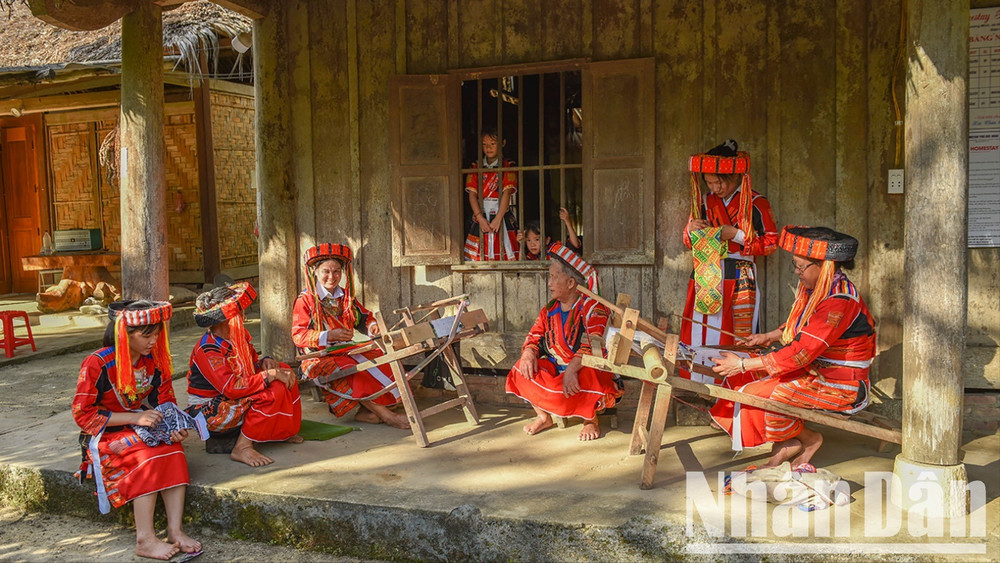
Videos circulating online show foreign male tourists wearing the traditional clothing of Hmong women, some even using the garments as makeshift scarves before dancing in tourist areas previously part of Hà Giang province, now under Tuyên Quang’s administration. Alarmingly, some Vietnamese tour guides and locals were present, either condoning the actions or even making light of them with humorous comments. These actions have further fueled public anger and highlighted a lack of awareness concerning cultural sensitivity.
A Code of Conduct for Responsible Tourism
Hoài further explained that Hà Giang province, prior to its merger with Tuyên Quang, proactively enacted and implemented a Code of Conduct for civilized tourism activities under Decision No. 2728/QĐ-UBND dated December 11, 2018. This code has been widely disseminated to tourism organizations, individuals, community tourism sites, accommodation establishments, tour guides, and local communities throughout the province. Tuyên Quang province now continues to implement and expand this Code.
The Department plans to enhance communication and monitoring of the Code’s implementation at tourist sites, raising awareness among both locals and tourists about respectful behavior and preservation of cultural heritage. The goal is to maintain Tuyên Quang’s image as a friendly, professional, civilized, and sustainable tourism destination.
Experts Highlight the Deeper Issue of Cultural Respect
Trịnh Lê Anh, Head of the Event Management Department at the Faculty of Tourism, University of Social Sciences and Humanities, Vietnam National University, Hanoi, provided expert insight into the matter from a sustainable tourism perspective. He stated that “traditional clothing is not for ‘trying on for fun,’ but is part of a ritual, a bridge for tourists to enter the spiritual world of the indigenous community, with respect. Tour guides and tour operators need more thorough training to understand and properly convey these cultural values. Tourism is not just for fun, but also to understand, to love, and to preserve together.” His comments underscore the need for a deeper understanding and appreciation of the cultural significance of traditional clothing among tourists and industry professionals alike.
The Need for Education and Enforcement
The incidents highlight a critical need for improved education and enforcement regarding proper conduct in culturally sensitive situations. The casual and disrespectful actions of the tourists, coupled with the seemingly tolerant or even encouraging attitudes of some local individuals, illustrate a significant gap in understanding and respect for the cultural heritage of the Hmong people and other ethnic minorities in the region. This underscores the importance of proactive measures, such as the Code of Conduct, and the need for consistent enforcement to protect cultural heritage from exploitation. The absence of immediate intervention by those present further reinforces the necessity of providing comprehensive training to tour guides and other tourism stakeholders to ensure responsible and respectful engagement with local cultures.
Beyond the Immediate Incident: A Call for Long-Term Solutions
While the immediate concern involves the disrespectful actions of the tourists, the broader issue points to a more systemic lack of understanding concerning cultural sensitivity within the tourism industry. This extends beyond the specific incident involving the Hmong clothing, encompassing a wider consideration of how tourism can be developed sustainably, ensuring both economic benefits and the preservation of cultural heritage. The focus must shift toward fostering genuine cultural exchange rather than merely offering superficial experiences that potentially trivialize or misrepresent local traditions.
The current response from authorities is a positive step towards addressing the immediate issue, but long-term solutions require a multi-faceted approach. This includes enhanced education and awareness programs targeting both tourists and local stakeholders, stricter enforcement of existing regulations, and a fundamental shift in how cultural experiences are presented and managed within the tourism sector. The ultimate goal should be to create a tourism environment that respects and celebrates the rich cultural heritage of Vietnam, ensuring its preservation for generations to come.
The incidents serve as a stark reminder of the need for responsible tourism practices that prioritize respect for local cultures and traditions above all else.
The ongoing investigation and planned initiatives by Tuyên Quang province aim to prevent similar incidents, promoting a more respectful and sustainable tourism model.